Residential security is an aspect that is prompting consideration among homeowners in Dallas. Most individuals have been looking for information regarding security options through a company’s website before making any decision regarding the security system. Nevertheless, the fundamental aspect that is essential before understanding a security system is the awareness of the functioning of a CCTV system.
Closed-circuit television systems help in the provision of monitoring, documentation, and enhancement of security. Dallas, being a metropolitan city, comprises zones like suburbs, gated communities, and urban residential schemes. Each of these zones has its security issues and requirements for cameras.
The Role of CCTV in Residential Security
CCTV systems have various functions in the context of home security. First of all, they serve as an obvious deterrent. It has been found in experiments and the accounts of police officers that, in most cases, the presence of noticeably placed cameras is enough to deter crimes of opportunity, like the stealing of packages, defacing of property, and intrusion.
Secondly, security systems store the visual evidence of events, which can be referred to later. Whenever there is a break-in, footage may be useful to the owners themselves, or to the police or the insurance company for verification of facts and identifying the culprits. Having this kind of evidence comes in handy, especially when there are disagreements over who caused the damage or who is at fault.
Last but not least, nowadays, it is quite common for CCTV setups to offer features like remote access. Through encrypted apps, not only can the owners check up on their homes anytime, but they can also watch the recordings at their leisure, thus feeling safe even when they are at a distance.
Key Components of Residential CCTV Systems
A typical residential CCTV system comprises cameras, a recording device, storage facilities, and monitoring software.
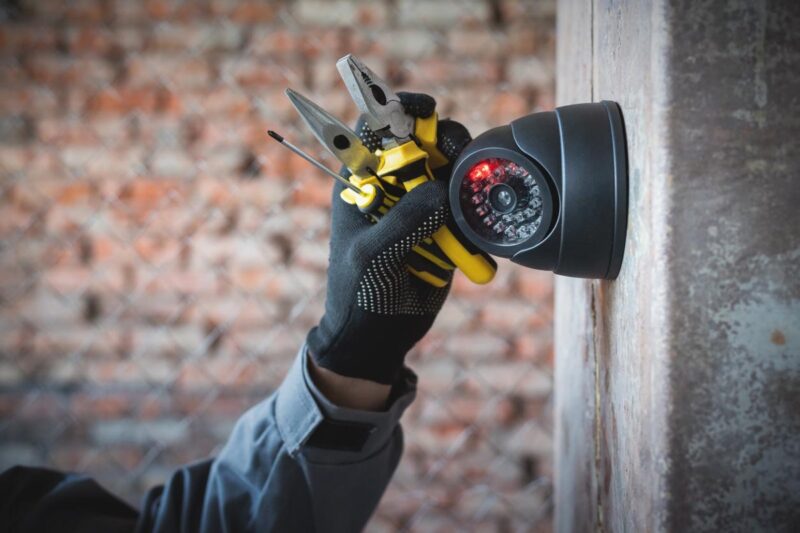
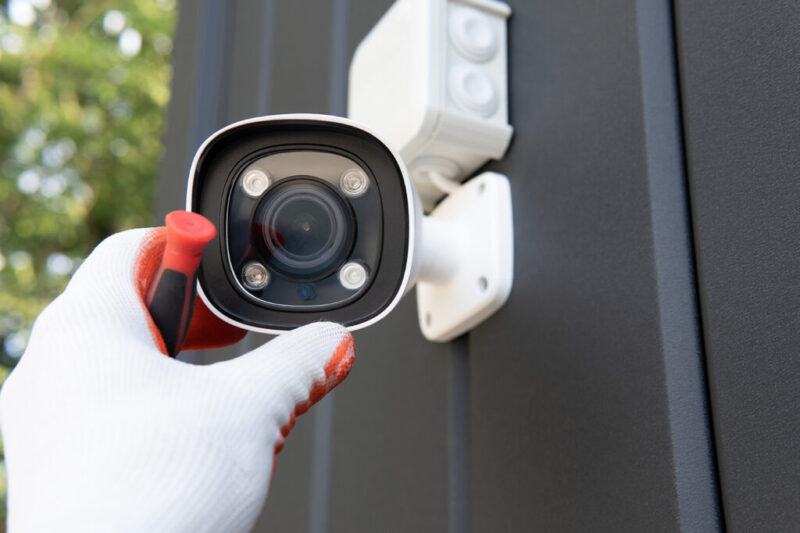
- Types of Cameras Used: In residential areas, the most common types of cameras are dome cameras, bullet cameras, and, recently, IP cameras. In inconspicuous locations inside residences, dome cameras are used more frequently, while for areas like the outskirts, where surveillance for larger ranges is required, bullet cameras are preferred.
- Recording Systems: Footage can be stored through Digital Video Recorders (DVRs) for analog setups or Network Video Recorders (NVRs) for IP-based setups. NVR setups are typically capable of providing higher resolution and more flexibility.
- Storage Solutions: Residents can decide to have their data either locally (hard drives inside DVR/NVR units) or through cloud-based storage. Local storage is beneficial for having immediate control over one’s data, whereas cloud storage offers an additional backup layer if the device becomes damaged.
Strategic Camera Placement in Homes
Where cameras should be installed plays a major role in the effectiveness of CCTV in terms of viewing coverage, rather than just the number of cameras installed. Typically, at the top of the list are entry and exit points of the house, such as front doors, back doors, and garage entrances. Also, driveways and windows on the ground floor are the areas that are mainly focused on.
In Dallas, in neighborhoods that have bigger lot sizes, the perimeter coverage may be taken into account. However, in order not violate the privacy of the neighbors, cameras have to be directed very specifically. Generally, according to Texas privacy laws, one is allowed to do surveillance only of their property; recording areas, where people have a reasonable expectation of privacy, are thus restricted.
Indoor positioning may, for instance, be based on areas that are common rather than on private ones. Usually, living rooms, hallways, and staircases are the places that are watched for, whereas bedrooms and bathrooms are left out in order to maintain the privacy of the family.
Environmental Considerations in Dallas
Climate substantially affects the durability and performance of cameras. Dallas is known for its very hot summers, occasional storm events, and varying humidity levels. Hence, outdoor cameras need to have heat resistance and weatherproofing ratings.
Ingress Protection (IP) ratings are the main factor in deciding if a camera can survive exposure to dust and water. Choosing the right gear according to the local climate is a sure way of getting a durable system with steady performance.
Night vision features come into play as well. Infrared or low-light cameras are generally installed to ensure visibility, especially in suburban neighborhoods where street lighting is limited.
Maintenance and Ongoing Monitoring
Regular maintenance is beneficial for the continued reliability of home security camera systems. The lenses must be wiped occasionally to clear away the dust or dirt. Also, firmware updates for IP cameras are necessary to fix security loopholes.
It is a good idea for the residents to check the footage storage capacity and retention settings to make sure that the recordings are stored for the right amount of time. System health monitoring, like inspections of the recording status and storage capacity, can be a trick to avoid sudden data loss.
Conclusion
CCTV solutions for residential homes within the Dallas area adopt a structured technique for home security by involving technology. The selection of appropriate CCTV cameras, the external environment, and the law are aspects of home security planning, which is more informed than impulsive decision-making. Technical information can be obtained from an online website, which is trustworthy with regard to security solutions.